Inside the
conversation.
A rapid-fire interview with The Startup Coach.
About Stuart Browne
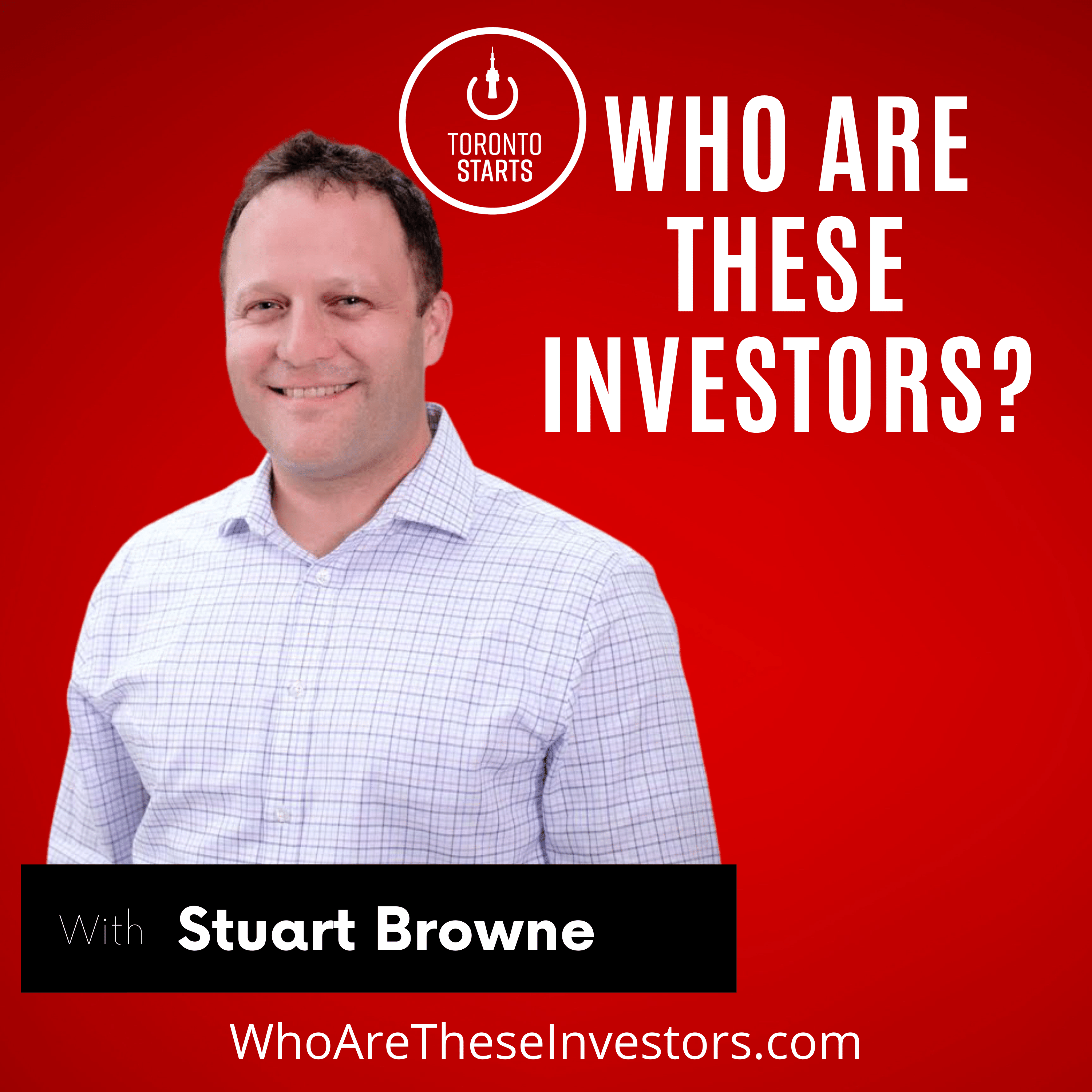
Stuart Browne is introduced as CEO of PyCap Venture Partners in this short conversation with The Startup Coach.
Guest details reflect the time of the recording.
Key takeaways
- PyCap describes investing mainly at Series A and using due diligence to identify gaps in company value.
- After investing, the firm helps companies build a roadmap and reach milestones that increase shareholder value.
- Founders should understand the investor's motivations to negotiate terms that work for both sides.
- A working prototype, proof of concept and market validation are useful foundations for an investor conversation.
- Cold outreach should explain succinctly why the company fits the investor's specific focus.
Welcome to Who Are These Investors, This episode features Stuart Browne CEO of PyCap Venture Partners. Listen to this 10 min rapid fire conversations where you get to know just who are these investors. Questions include.
Original show notes & resources
Welcome to Who Are These Investors, This episode features Stuart Browne CEO of PyCap Venture Partners. Listen to this 10 min rapid fire conversations where you get to know just who are these investors. Questions include.
What is the stage you invest and the average size of investments?
What is your preferred exit timeline?
What are some of the things you/your firm does to support the companies you invest in?
Are there any terms your require when investing (IE – liquidity provisions, board seat, etc)
What is a red flag for you when a startup is pitching or negotiating?
What do you wish more founders understood before negotiating investment terms?
What do you look for in a startup?
When should startups reach out to you?
One book every entrepreneur should read before talking to investors?
Best cold outreach technique you have seen by startups?
Read the automated transcript
Automatically transcribed from the restored recording on October 26, 2026. Transcription errors may be present; refer to the audio for exact wording. [Unclear] marks uncertain speech.
Welcome to Who Are These Investors. Podcast Shorts featuring interviews with investors in Canadian startups. Welcome back to Who Are These Investors. I am the startup coach, founder of TorontoStarts, one of the largest startup communities in Canada and with me today is Stuart Browne of PyCap Venture Partners. Welcome Stuart. Hi. Good to be here. So what is the stage you invest and the average size of your investor? The average size that we invest is around $200,000 to $500,000.
Canadian and we usually invest in companies that are at the Series A round. What is your preferred exit timeline? Between three to five years. What are some of the things that you and PyCap do to support companies that you invest in? Well, when we're getting into the process of investing into a company, we're pretty thorough with our due diligence and analysis and we perform a very in-depth valuation on each company and that allows us to highlight certain value.
Gaps. So once we make that investment, we look to fill in those gaps by creating kind of a roadmap for the company to reach different plateaus of shareholder value. And then we also help them achieve those different milestones by providing them with guidance or the resources they need for that. Are there any terms that you require when investing? It's so different every company that we invest in and who are co-investing with and who's leading the round. So there's no cookie cutter approach in terms of what we follow, but there has been
situations where we all require a board on the seat of directors, but that's not necessarily a rule of thumb that we always follow. It really depends on the company's life cycle stage, how risky the investment is, how strong the management team is. If they need someone to get actively involved, we might want to put some terms in there to facilitate that. What is a red flag for you when a startup is pitching or negotiating? Depending on how far the entrepreneur goes within the reality distortion field
could be an issue. There's a spectrum. On one side, you have somebody who's being fully transparent and upfront, and then there's kind of bending the reality and bending the truth a little bit just to keep your attention and prevent you from going to the next shiny object. But when a company starts going too far on the side of full fabrication, that's the biggest red flag. What do you wish more founders understood before negotiating investment terms?
They should really understand the motivations of the person sitting across from them at the negotiation table. The more they can understand the perspective of their investor, the easier it will be to come to terms that are fair for both parties. It's when entrepreneurs just assume that VCs are sitting on a ton of money and they have to spend it somewhere and why not give it to them. That's when there might be a bit of a conflict in terms of what the entrepreneur thinks they deserve and what the VC believes they deserve as well.
What do you look for in a startup that you're going to invest in? Well, there's a lot of standard stuff that you could research in terms of what VCs look for, like a large enough addressable market to generate a sizable return, strong management team, innovation that has disruptive qualities, all of that good stuff. One additional thing that we really look out for is an entrepreneur who's completely obsessive and compulsive and passionate
about their company. And the reason why I say that is because when you're creating a startup and you're bringing it to market, you have no idea how the market's going to actually react to what you're providing. And then it's a long journey from taking a company from zero to being a unicorn. And there's a lot of things that can happen along the way. COVID-19 is a perfect example. And this company ChargerQuest that we're involved with, it's all related to electric vehicles and charging stations and people traveling from point A to point B. And all of a sudden, early on in
the company's life, the pandemic hit and there was a lockdown and no one was traveling. I was very proud to be a part of a team where we put our heads down and we said, okay, we're not going to sit this out, wait for this to blow over. And we didn't even want to pivot either. We just said, what are we going to do to make this an opportunity for a company? And that's exactly what we did. And it's because we had that more or less hell bent on making the company successful, no matter what happens, including the ultimate thing that could happen, which is a pandemic
and continuously pushing forward. So if I see an entrepreneur with that kind of drive, it gives me a lot more confidence that they're going to make sure their company is going to be a success story. At what point should startups be reaching out to you or a podcast venture partner? First of all, do their research and they realize that their company is an actual fit for venture capital financing number one, because not all companies are. And then above and beyond that, if they have at least at a minimum a working prototype proof of concept, market validation,
then we could start having a conversation with them and start learning about them and the company. And then if there is a fit, we could look to build a relationship. And if that works out, there is a possibility that we can invest in them. Yeah, the key word I heard in all that was market validation. Yeah, definitely. It's becoming more and more important for all investors across the board. One book every entrepreneur should read before talking to investors. I'm going to be very typical here with my book recommendation, but I think the entrepreneur should really
read and reflect on the lean startup by Eric Ries. I mean, that speaks to validation right there, not spending too much of your time, energy, effort, and money pursuing a business idea that you haven't validated in the market or your customer segment. There isn't a sample set that you've used to kind of give you that reassurance that you're on the right track and you're developing your technology in a way that's going to be a fit to the market. So I really recommend they read that book and really reflect on how they're following guidance from that book with the
development of their business model. Best cold outreach technique you've seen by startup. You know what? I'm not a huge fan of cold outreach because as an investor, I just get completely inundated with everybody you can imagine asking for money, whether it's service providers to entrepreneurs to MBA grads looking for a job. So cold outreach can be very difficult. If I was to give some advice in regards to a cold outreach, make sure that the person you're contacting,
whatever you're messaging them is as close to a perfect fit for what they're looking for as possible. If it's a VC who's investing in AI within the med tech space, make sure that your company is an AI company within the med tech space. And you mentioned that in a very succinct way when you email them or you send them a message on LinkedIn. Where can people go to find out more about you and PyCap? Best place to go would be our websites. Our website is just www.pycap.com.
That's P-Y-C-A-P.com. Thank you. I really appreciate you taking the time to be part of who are these investors. Pleasure to be here. Thanks Craig. This has been Who Are These Investors? Find out more at www.whoaretheseinvestors.com and follow our live events at torontostarts.com slash events.