Inside the
conversation.
A rapid-fire interview with The Startup Coach.
About Matan Hazanov
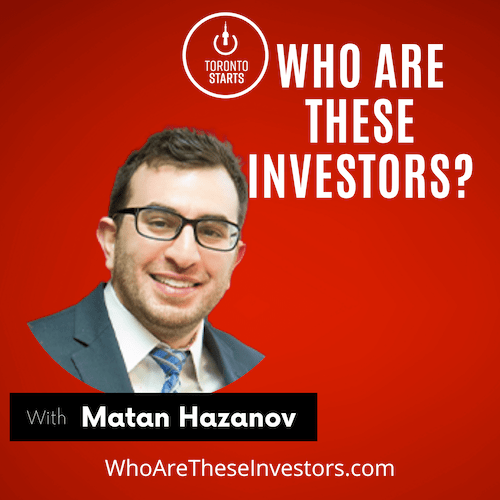
Matan Hazanov of Verstra Ventures joins The Startup Coach to discuss the investor's perspective on startups and fundraising.
Guest details reflect the time of the recording.
Key takeaways
- Verstra invests in seed and Series A companies, with a focus on vertically focused B2B software.
- Its corporate investment model allows a long-term approach rather than a fixed fund exit deadline.
- The firm looks for ways to bring expertise and strategic relationships alongside capital.
- Transparency builds trust: investors doing diligence will eventually find negative information.
- A short product demo and outreach that clearly matches the investor's criteria can make a pitch stronger.
Welcome to Who Are These Investors, This episode features Matan Hazanov of Verstra Ventures . Listen to this rapid fire interview where you get to know just who are these investors.
Original show notes & resources
Welcome to Who Are These Investors, This episode features Matan Hazanov of Verstra Ventures. Listen to this rapid fire interview where you get to know just who are these investors.
Questions Include:
- How do you position yourself in the startup ecosystem?
- What is the stage and the average size of investments you work with?
- What is your preferred exit timeline?
- Are your clients capital fully deployed, or are you still looking for investments?
- Lead an investment round, or join existing rounds?
- Are there any terms you require when investing?
- What is a red flag for you when a startup is pitching or negotiating?
- What do you wish more founders understood before negotiating investment terms?
- What do you look for in a startup?
- When should startups reach out to you?
- Best cold outreach technique you have seen by startups?
——
Register for Startup and Entrepreneur Events here
TorontoStarts Entrepreneur and Startup Community
Starting A Business in Ontario: A Resources Guide For Entrepreneurs, Startups, and Scaleups
Monthly Entrepreneur & Startup Investor Speed Dating
Join us for Startup Pitch Battle
Read the automated transcript
Automatically transcribed from the restored recording on October 26, 2026. Transcription errors may be present; refer to the audio for exact wording. [Unclear] marks uncertain speech.
Welcome to Who Are These Investors. Podcast Shorts featuring interviews with investors in Canadian startups. Welcome to Who Are These Investors. I'm The Startup Coach, and with me today is Matan Hazanov of Verstra Ventures. Welcome, Matan. Hey Craig, thanks for having me. What is the stage you invest in in the average size of investments? So we invest in what they call early stage companies, which is seed and series A. We typically invest anywhere from half a million to five million dollars per check.
How many investments have you or your firm made over the years? In the last three years of active investing, we've made 12 investments in 10 companies. We try to do about one a quarter or four to six a year. And what is your preferred exit timeline? Because we're a corporate venture capital and we invest off balance sheet, we don't really set a timeline for when we want to exit. We try to make decisions in the best interest of the company creating long term value. And we're really compensated based on the value we create for the business is not necessarily the cash exit.
So we're incentivized to make decisions out of the long term interest of the company, despite what that means for short term exit. So we can be there for 10 years, 15 years, five years. It depends on what's the best stuff for the company. What are some of the things that Verstra Ventures does to support companies you invest in? So we're part of a much larger organization called Constellation Software. Constellation is a prolific acquire of vertically focused B2B software businesses. They do dozens or more acquisitions a year all over the world in any vertical you can think of.
One of the experiments for running is trying to determine can we become very good venture capital investors by leveraging all the resources talent knowledge set are from from some of the businesses that our parent company already owns. So one of the things we do during our diligence is figure out. Is there something we can do here beyond the capital to add value to the businesses mean best and that could take different forms and it has that over the last couple of years. Sometimes it means bringing on industry experts onto the board. Sometimes it means parachuting in very specific functional experts out with a particular area of the business.
Sometimes it means direct strategic relationship. It can mean different things for different companies, but that's something we're striving to do is to create value beyond just. Is your capital fully deployed or are you still looking for investments? We invest all balance sheets. So so long as the experiment is running, we have the capital to deploy. So we're evergreen, whatever they call everything. So we're investing so long as there's an interest for us to make investments. Do you like to lead an investment round or join an existing round? We do both. One of the things we try to do is lead investments because we like to take board seats.
We feel that we have enough value that we can bring to the table that merits that, but we've followed other investors terms whenever it made sense for us, along as some of those elements are still there. Are there any terms you require when investing? Yeah, it depends on the company we're investing in, but typically we will do convertible note or equity preferred equity round. We like to see the typical things like weighted average and dilution, liquidation preferences, some protective provisions around certain key decisions that the company makes, but it really is a negotiation and the world can anything reasonable that the company wants.
What is a red flag for you when a startup is pitching or negotiating? One of the biggest red flags is when we get the sense that the company is not being transparent or honest or when they're spinning information in order to make it sound like their performance has been better than it actually is. It doesn't happen as often anymore because I think the more mature founders that we come across don't do that. But we do see that often enough that it is a red flag. It's not always disqualifying because we understand the pressures that some founders are under.
When they perceive that some of their information will turn off investors, they try to spin that. And we try to give a lot of slack, but it is a red flag. The best advice I can give when it comes to pitching or negotiating or meeting people for the first time is try to be as honest as possible because eventually an investor that's doing their homework, which is the kind of investor you want to invest, is going to see that negative information. Eventually they're going to see it. So might as well be upfront. What one thing do you like to see in a pitch that you don't see very often? One thing we typically don't see is demos.
It's sometimes hard to give a demo for certain products, but the more you can show how the product is being used, where the value is being created. I think it actually, you know, pictures worth a thousand words, but the demo is worth a million minutes. So where you can't sometimes start to express exactly what the product is, especially in software. Seeing a demo of the product usually, you know, one, two-minute demo can go a long way. What do you wish more founders understood before negotiating investment terms? I think one of the pitfalls a lot of founders get into is they see a lot of the data on venture capital valuations and deals.
And there's a certain expectation that sets upon them that, especially the better companies out there, there's certain expectation that that's set by a lot of the headlines that they'll see in the news. And I think that that's a mistake. They should treat investors, and this is how I didn't want to raise money, and certainly how I'd operate on an investor, is treated like it's your life savings. When you go over your family's life savings, you're asking someone to invest a substantial amount of money on you and your team, and the future of what you're going to do. It's not based on what the business is today, because the business today, most of the time is not worth very much, certainly not worth the, you know, the 10x multiples that people and more people are asking for today.
So treated as if it's your life savings or your family's life savings. And if you approach asking an investor for money from that perspective, you start to think about the page in a different way, you start to see the holes and the pitfalls and your arguments and start to, and what you should be doing is trying to close those holes, said, you're more confident in putting your life savings in the business. So I think that approach can actually refine how you look at your own business and trying to, and how you actually approach investors. That's how I look at investments. I'm not willing to putting, you know, my family's savings into it.
I probably wouldn't put the firms like the firms money into it. What do you look for in a startup? I want to say we're, we're unique, but we have a set criteria that we look for. We look for B2B vertically focused software businesses and more enterprise the better. But there are common themes around every startup that any investor would want to any rational person that that's spent around time businesses want they want a good team that there's a clear story why they're the right people to point in the space. You want the market that's large enough to justify the kind of business they're building.
You want tech that's unique or that there's some barrier to, you know, random people that spent maybe a year on software development to just do what you're doing just to copy what you want some barriers to that. You want to see that there's evidence that people want the product that they're solving a big enough problem that's as long as they deliver an execute people are going to the product that they're selling. So some of those are some of the elements that I look for that I think are common amongst most investors in the startup pool. So when should a startup reach out to you. As soon as they have some product market fit I think it's good time to speak with us. Now we only invest in a company has a couple hundred thousand dollars and recurring revenues from their target customer.
But we like to develop relationships as early as possible so maybe even when they have a product in the market or even at the conceptions in some cases will will speak with them and we like love to build that relationship even a year to before they're going to be ready to raise money from us. I think they're too late or too early they should still reach out to us if they fit our general profile bdb vertical focus off. What's one book every entrepreneur should read before talking to investors. I think when one entrepreneur is ready to start raising capital.
They should read venture deals by Brad Feld I'd use that book and I buy for everybody that works for us as an intern or as an analyst. Those it may be to the data but not really provides a DNA of how a venture deal looks like. And it's very important to understand all the elements of the deal before you start negotiating those terms. Another one that I would recommend is also from goods grade which discusses the DNA of a great company. I think those two books are pretty good for a Friday entrepreneur. Best cold outreach technique you've seen by startups.
One that I've seen that I think is pretty unique is actually putting in an email if an email is the right way to do it is to put in an email. How you see that your investment criteria fits with the companies doing very simple. You don't need more than two, three sentences or a list of four or five things. Hey, you guys are looking for this. This is what we offer. You're looking for this. This is what we offer. Another method I used to do is not just for raising capital or something like that. But anytime I was looking for a job or trying to develop sales was to send a be very intentional.
I would make a list of maybe 10 or 15 people that I wanted to reach out to that had a reason to speak with me. They just to know that I existed and send them a courier with a mug with a note and it's saying this before the pandemic. And with a note and saying, hey, let's get to Jeff time for 15 minutes for your next cup of coffee. They have a mug that I have. So that's cute. It certainly gets someone's attention. It's creative. And it has a high success rate. Where do people go to find out more about Verstra Ventures? So you can go on our website, verstraventures.com. You can find me on LinkedIn.
Look me up. I'm probably the only person with my name. So you won't miss it. And you can send a message to me. You can email contact at verstraventures.com. You can email me personally on LinkedIn. And I'll respond. Sometimes it'll take me a few days or a week, but I'll respond. Thank you for being part of Who Are These Investors? Thank you, Craig. I really appreciate the opportunity to speak about Verstra Ventures. This has been Who Are These Investors? Find out more at WhoAreTheseInvestors.com
and follow our live events at torontostarts.com slash events.