Inside the
conversation.
A rapid-fire interview with The Startup Coach.
About Danielle Graham
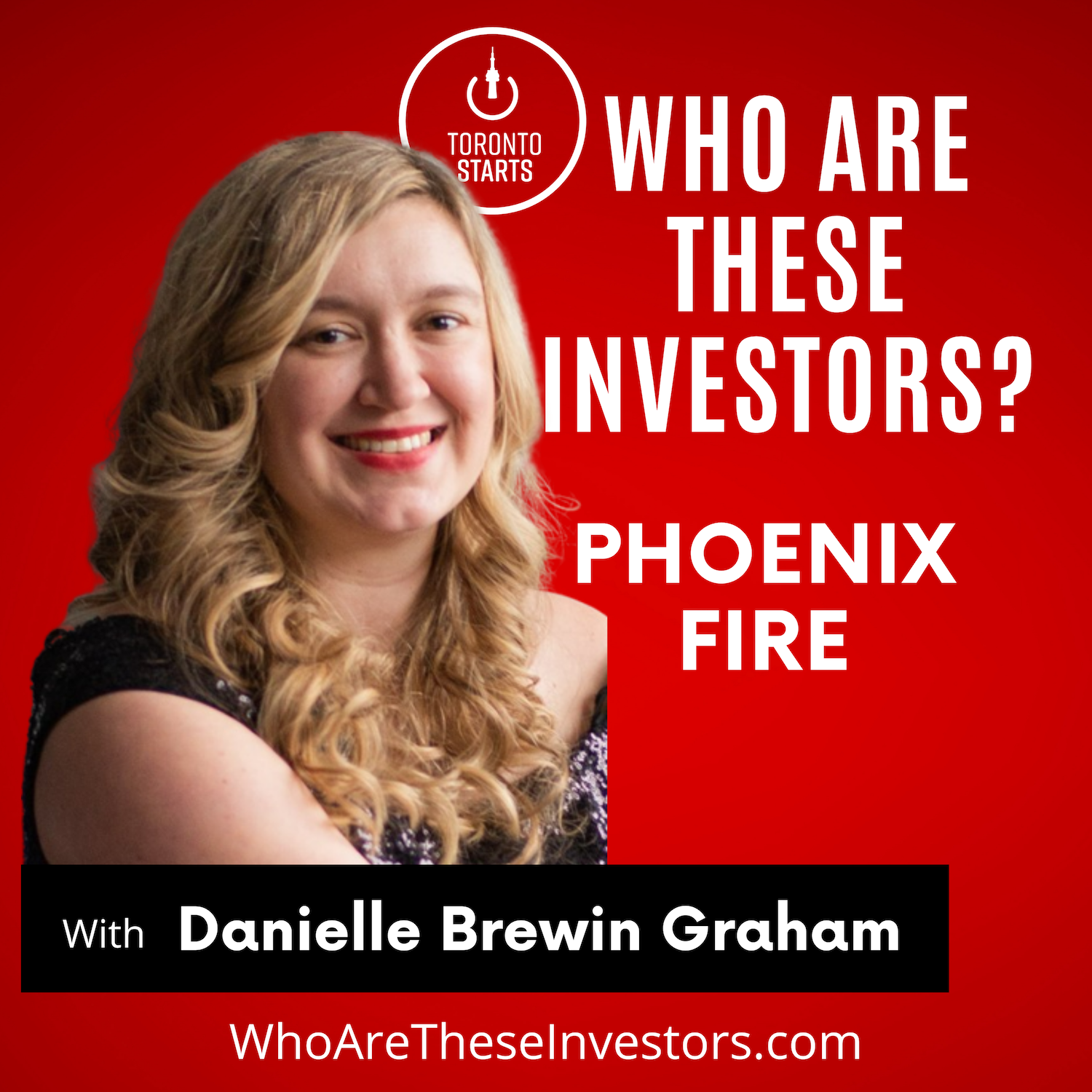
Danielle Graham joins the show representing Phoenix Fire for a rapid-fire introduction to the person behind the investment.
Guest details reflect the time of the recording.
Key takeaways
- Phoenix Fire focuses on women-led startups, mainly at pre-seed and seed stages.
- Its investor network supports founders with introductions, fundraising and access to experienced advisers.
- A clear traction slide should explain customer conversations, progress and the sales process.
- Founders should learn the language of valuation, cap tables and investment terms before fundraising.
- Personal, relevant outreach that shows an understanding of the investor is more effective than a generic message.
On this episode on Who Are These Investors Danielle Graham of Phoenix Fire. Listen to this rapid fire interview where you get to know just who are these investors.
Original show notes & resources
On this episode on Who Are These Investors Danielle Graham of Phoenix Fire. Listen to this rapid fire interview where you get to know just who are these investors.
Links:
Join us for Startup Investor Drinks
Register for Startup and Entrepreneur Events here
TorontoStarts Entrepreneur and Startup Community
Starting A Business in Ontario: A Resources Guide For Entrepreneurs, Startups, and Scaleups
Monthly Entrepreneur & Startup Investor Speed Dating
Join us for Startup Pitch Battle
Read the automated transcript
Automatically transcribed from the restored recording on October 26, 2026. Transcription errors may be present; refer to the audio for exact wording. [Unclear] marks uncertain speech.
Welcome to Who Are These Investors. Podcast shorts featuring interviews with investors in Canadian startups. Welcome to Who Are These Investors. I'm The Startup Coach, founder of TorontoStarts, one of the largest startup communities in Canada. And with me today is Danielle Graham, managing partner of Phoenix Fire. Welcome. Thank you for having me, Craig. It's great to have you. Tell us about Phoenix Fire and the Archangel Network. So Archangel Network of Funds was founded in 2020.
During the pandemic, and we launched with an initial three funds focused on early stage angel stage technology startups. We actually did a COVID initiative as well focused on COVID related tech solutions. And this year we launched a fourth fund within that network called Phoenix Fire, which is fully focused on women led startups. What is the stage you invest in in the average size of investments? So we've been kind of categorizing it. As angel stage, which essentially means any stage that an angel would participate in fundamentally more inclined towards pre-seed and seed, but larger rounds within those stages where you're looking at at least, you know, a million dollars, maybe two where we can participate with check sizes of 100k to 300k as an overall fund. And we're looking at supporting those companies with some strategic supports through our network.
How many investments have you made over the years? So Archangel itself is announcing soon more of the full range of investments. We've done over 15 at this point, and we're excited to announce those soon. What is your preferred exit timeline? So we look at a little longer range than most funds because we understand that investing earlier means they're going to exit later. So most funds will do an eight year with one plus one to give some flexibility around the actual exit time frame.
For us, we understand that companies could take 10 years or longer. And so, yes, we're looking at those timelines and we want to show those returns to our investors, but at the same time, we offer flexibility when it comes to that opportunity because we want to see the maximum return. What are some of the things that you do to support companies you invest in? So again, we have a strategic network of LPs, so a lot of them can offer their own networks. We've got executives from banks, consulting firms, founders who have exited themselves and have gone through that full lifecycle of a successful company to exit.
So those are the types of individuals who will tap on to support our founders when they're raising when they've raised and when they're looking at advisory board members and access to potential clients. So we offer a lot of that support. We're also pretty hands on with the fundraising process and are able to provide a lot of other introductions to our network. Are we currently looking for startups to invest in? Yes. Do you like to lead an investment round or join existing rounds?
Currently, we've been joining existing rounds. There have been a few co leading opportunities that have come our way for the overall fund and archangel, but for the most part we've been participating, especially with the smaller checks that we write. For the most part, we're looking at valuations of under 10 million. So I would say that's a big kind of key piece. If they're raising at a more significant valuation, then it's not likely we'll participate. And we're also unlikely to participate with [unclear].
I would say there's a lot of red flags. I tend to call them more like yellow or orange flags because there's a lot of things that can be coached. So it might not be an intentional kind of mishap to state some overstate something. We don't have any competitors. Well, they may think that's a good thing, but it's actually a negative thing because there's a lot of reasons why I would need to look into that to either say, well, maybe they don't know their competitors as well as they should.
Maybe there's a reason others aren't participating in that market. So there's a lot of actually very concerning elements saying you don't have competitors. They think first move or advantage is an advantage, but I think it's actually first move or disadvantage. So there's things like that where, you know, stating, you know, we have patents, we own this space can also be a concerning element to understanding the process of commercialization and the fact that patents are extremely difficult to defend. So stating things like that can seem like embellishments and most founders will quickly take that back and understand the nuances.
And they're just trying to sell themselves versus founders who if they continue to believe that, then they're not implementers. They're not entrepreneurs. They think that building something and then they'll come is the way that you're going to gain traction. And that's that's a big red flag. What one thing do you like to see in a pitch that you don't see very often? I like to see the traction slide. So I really like to see companies that can showcase where they're at in the process of gaining customers letters of intent.
What true conversations are taking place versus haphazardly mentioning a client here or client here. I like it to be consolidated and positioned well so that I understand their sales process as well. What do you wish more founders understood before negotiating investment terms. Yeah, there's a lot of things to learn about the investment process so understand that it's a pretty steep learning curve, but there's a lot of founders can do to do their own homework upfront.
So if they're stating that, you know, there's a lot to learn around the valuation how to calculate that the cap table, all these things. So a lot of the time when founders come to me. I wish they had done at least some fundamentals on the language and researching the process so that they're at least driving that process. And if they once they have that underway, I think there's a lot that investors would be open to helping them through, especially for their first phrase.
What do you look for in a startup. A lot of things. So it's not a simple question to answer. I think the biggest thing for me is to see the passion, the founder, the fact that they're going to stick to this idea for the long term that they're truly going to become a subject matter expert. Lead the path forward for this disruption that they're trying to cause in the market, and they're going to maintain their kind of innovative spirit as they drive their market.
So it's, it's really about the individual, it's about their talent, their capabilities, and whether what this, what they're building is aligned to their future. I don't want to see someone who's coming in and saying, I'm looking for a quick exit. I want someone who is really going to drive forward that idea through thick and thin, getting, you know, hit with, you know, COVID as even like an old pandemic, not just personally. I saw a lot of the resilience and the founders that I'd selected over the years who actually benefited because their technology was being adopted more effectively because people were willing to, you know, go off the paper base solutions.
Right. And so there are opportunities in every scenario and the ones who are really passionate about solving a major world problem are the ones who don't let anything deter them. So that's what I look for. When should startups reach out to you? I think, you know, it's a, it's a careful nuance. So I would just caveat with, yes, I invest in the earliest stages, but it's about knowing when you can benefit from mentorship and support.
When you're willing to take that on, when you've got enough of something formed, and you know your direction so that you can pull it all together in a deck, a data room, in a campaign for fundraising, marketing campaign, whatever that looks like, I can help drive that forward and I'm happy to earlier on than most investors, but they need to have poor concept and something that they're passionate enough about that they can articulate.
They can drive it forward and they can bring together, you know, the clients, the customers, all of those things. One book every entrepreneur should read before talking to investors. Venture deals by Brad Feld. I know people have probably made that recommendation, but it's along the same lines as what I've been saying for, you know, just getting that language basis for supporting your own knowledge of what everyone's talking about.
So no one's left like saying, okay, this is what this word means. You don't want to have that kind of conversation. You want a more strategic conversation. What's called outreach technique you've seen by startups? I think just a genuine approach, right? So something that showcases they've actually learned something about me. You know, sometimes founders have read articles and they relate to something. So I'm not just getting an email that I know or a message on LinkedIn that I know someone has written to like 10 other investors.
It needs to feel personal and it needs to feel relevant. And I'm happy to take calls with founders who have found an alignment with me in some way or another. That's actually what I'm looking for. So where do people go to find out more about you, Phoenix Fire and the Archangel Network? So we have the Archangel website, ArchangelNetwork.ca. I've written a lot of articles, especially recently on investing in women entrepreneurs and tips and tricks for raising angel funding through now that Toronto Metropolitan University through women entrepreneurs
is Saskatchewan. So I'm trying to get myself out there as well. Women have influenced articles. So I think you'll get a good sense of who I am and what I stand for and whether or not we would be a good fit from an investment standpoint. Thank you for taking the time to be part of who are these investors. Thank you, Craig. This has been Who Are These Investors? Find out more at WhoAreTheseInvestors.com and follow our live events at TorontoStarts.com slash events.